Why Every Job Seeker Needs a Public Portfolio.
A free public portfolio page helps job seekers show proof beyond a resume. Learn what to include for technical, business, and non-visual roles.
 By Shivani S, Co-founder, ReachRole

A free public portfolio page for job seekers is useful far beyond design, photography, and software development. The basic purpose is universal: give a recruiter one link that shows more proof than a one- or two-page resume can carry. A sales manager can show growth outcomes, an operations lead can explain a process improvement, and a marketer can connect campaigns with results.
How can tech job seekers create a free public portfolio page that impresses recruiters?
A recruiter-optimized public portfolio page should be a single, responsive, fast-loading link showcasing 3–4 featured production projects with live demo URLs, GitHub repositories, and brief architecture summaries. Include verified skill tags, contact links, and downloadable text-selectable PDF resumes so hiring managers and founders can assess your engineering proof of work in under 30 seconds.
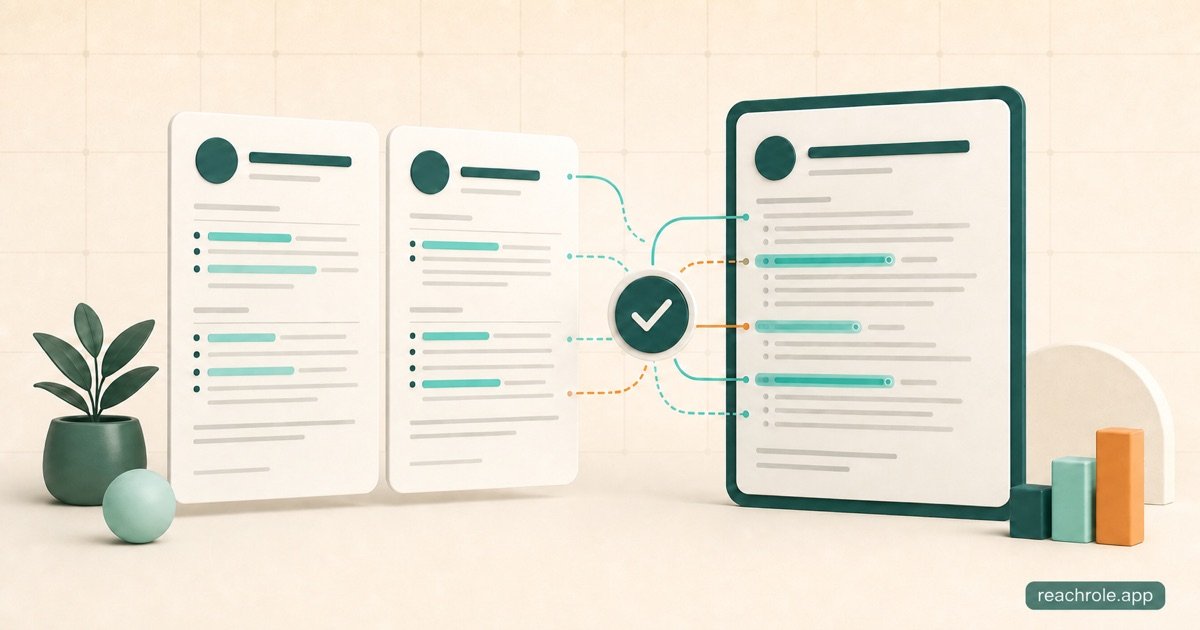
Your resume remains the fast summary. The portfolio adds depth for the reader who wants it. It can hold selected projects, case studies, testimonials, links, certifications, and a more personal introduction without forcing every detail into the application document.
Use this guide well
Apply the recommendations to one real target role at a time, then keep only the changes you can support in an interview.
Why LinkedIn alone is not a complete portfolio
LinkedIn is valuable for discovery and professional networking, but every profile follows the platform’s structure. Your work appears beside notifications, feeds, recommendations, and other profiles. A portfolio gives you more control over the sequence of the story and the proof you want a recruiter to see first.
Use both rather than choosing one. Let LinkedIn help people find you, then link to a focused portfolio for deeper evidence. Add the same portfolio URL to your resume, email signature, job applications, and outreach where appropriate.
What every job seeker portfolio should include
Start with a clear headline that says what you do and the type of opportunity you want. Follow with a short summary, a small set of core skills, and two or three proof points. Each project or achievement should explain the problem, your contribution, the tools or approach, and the outcome.
Finish with a simple contact method and links that strengthen trust, such as LinkedIn, GitHub, published writing, certifications, or a relevant presentation. Check every public link and remove confidential employer or client information.
- A role-specific headline and concise professional summary.
- Two or three selected projects, achievements, or case studies.
- Evidence such as metrics, links, screenshots, writing, or testimonials.
- Relevant skills, certifications, and professional profiles.
- A clear contact path and the type of opportunity you welcome.
Portfolio examples for non-visual careers
A product manager might present a launch case study with the problem, decisions, collaboration, and adoption result. A data analyst can show a sanitized dashboard and explain the business question it answered. A recruiter can describe a hiring process improvement. An operations candidate can document a workflow that reduced errors or turnaround time.
If you cannot publish work samples, write a short case study without confidential details. Focus on your reasoning and contribution. A credible explanation of how you approached a problem is more useful than a gallery of images with no context.
Keep the page focused, current, and safe
A portfolio is a curated page, not a complete archive. Lead with the work most relevant to your current target and remove older examples that weaken the story. Review the page each month during an active search and after every major achievement.
Before publishing, remove phone numbers or personal details you do not want indexed, confidential documents, client data, internal dashboards, private repository links, and names you do not have permission to share. Use an email address intended for professional contact.
- Prioritize relevance and proof over the number of projects.
- Write descriptive link text and add context to every sample.
- Check mobile readability and all outbound links.
- Protect confidential information and control public contact details.
Create your public portfolio page with ReachRole
ReachRole can turn information from your resume into a clean public profile at a shareable URL. You can add projects, skills, links, certifications, and availability, then choose what should be public. This removes the need to set up separate hosting or design a page from scratch.
Edit the generated content before publishing and feature the two or three proof points that best support your target role. Then share the link wherever a recruiter might want more context than your resume provides.
Check your resume against these hiring standards
Upload your PDF to get an instant match score, detect missing keywords for your target role, and check single-column parsing.
Scan my resume free → ✓ No account needed · Takes 60 seconds
Shivani S Co-founder, ReachRole
Co-founder of ReachRole. Writes about ATS screening, resume structure, and the Indian hiring process.