Biggest Resume Mistakes That Prevent Interviews (And Fixes).
Avoid the biggest resume mistakes that cost you interviews in 2026. Fix ATS parsing traps, missing keywords, task lists, and unquantified bullets.
 By Shivani S, Co-founder, ReachRole
If you are submitting dozens of applications on LinkedIn, Naukri, or company career portals and hearing nothing back, the silence is rarely about your core qualifications. In 2026, hiring funnels operate as high-volume screening pipelines. For every corporate job posting, recruiters receive between 200 and 1,000 applications within 48 hours.
To survive that volume, hiring teams rely on a two-stage filter: first, algorithmic parsing and keyword ranking via Applicant Tracking Systems (ATS); second, a rapid 6-to-10-second human recruiter scan.
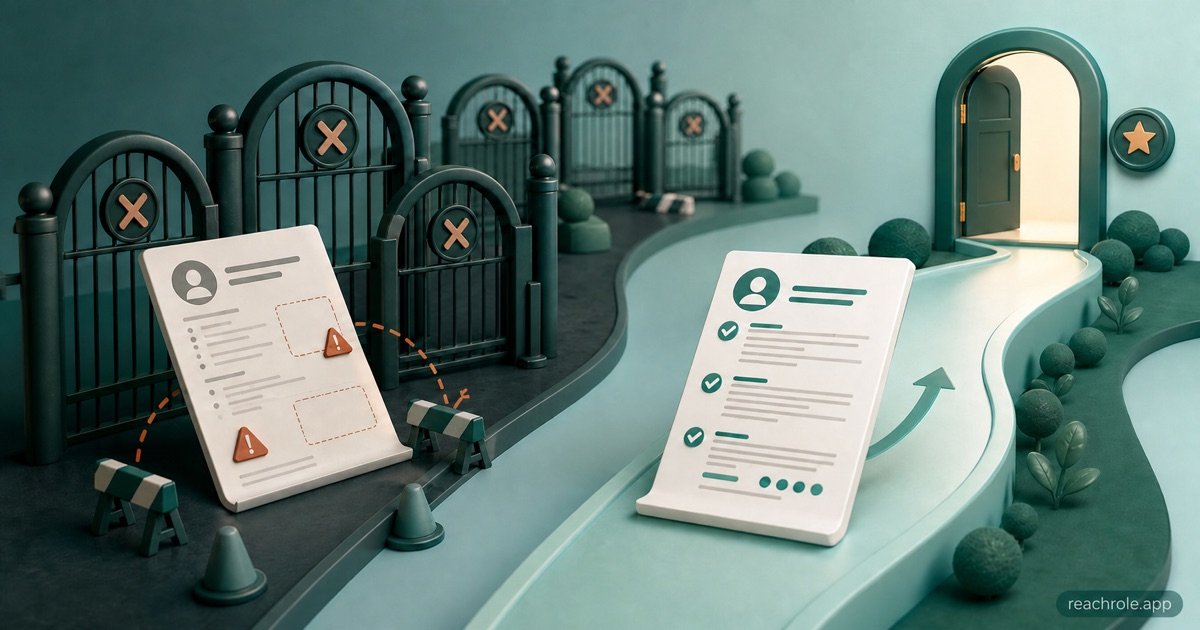
A single structural flaw, unparsed table, or vague duty bullet is enough to eliminate your application before an interview is ever scheduled. Here are the biggest resume mistakes that prevent interviews — and the concrete, mechanical steps to fix each one today.
1. The "Kitchen Sink" Responsibility Trap (Duties vs. Outcomes)
The single most common mistake on resumes is treating the experience section like an HR job description. Listing daily tasks tells a recruiter what your team was supposed to do; it reveals nothing about how well you actually performed.
Recruiters and hiring managers do not hire "people who were responsible for tasks." They hire people who solved problems, optimized workflows, drove revenue, or saved engineering hours.
Use the proven formula: Action Verb + Specific Context / Tool + Measurable Business Outcome. If you cannot find exact dollar amounts, use percentages, team sizes, time saved, or bug reduction rates.
2. ATS Parsing Traps: Fancy Visual Layouts and Multi-Column Columns
Many candidates build their resumes on graphic design tools like Canva, Photoshop, or complex multi-column Word templates. While these look stylish on a graphic designer's monitor, they frequently scramble in applicant tracking systems like Workday, Taleo, Greenhouse, or Naukri Resdex.
When an ATS parses a two-column resume, it often reads across the entire page horizontally. Your job title from column one merges with the skills list in column two, turning your work history into garbled nonsense that scores near zero in algorithmic searches.
- Headers & Footers: Never place your email, phone number, or LinkedIn URL inside Microsoft Word headers or footers. Many parsers completely skip margin regions, leaving your application with missing contact details.
- Tables & Text Boxes: Parsing engines frequently discard floating text boxes and table cells.
- Skill Rating Bars & Stars: Five colored stars next to "Python" cannot be read by an ATS and tell human interviewers nothing about your actual production proficiency.
To avoid parsing rejections, stick to clean, single-column formats. You can download tested, compliant templates from ReachRole's Free ATS Resume Templates catalog.
3. Hard-Skill Keyword Blindness
Applicant tracking systems and recruiter search engines (like Naukri's Resdex or LinkedIn Recruiter) match candidates based on boolean search strings. If a job requisition demands Docker, Kubernetes, CI/CD, and PostgreSQL, but your resume only mentions "containerization, cloud deployment, and relational databases", you will rank at the bottom of the recruiter's candidate dashboard.
Recruiters filter hundreds of applicants by typing exact keywords. You do not need to "stuff" keywords artificially, but you must mirror the exact professional terminology used in the target job description.
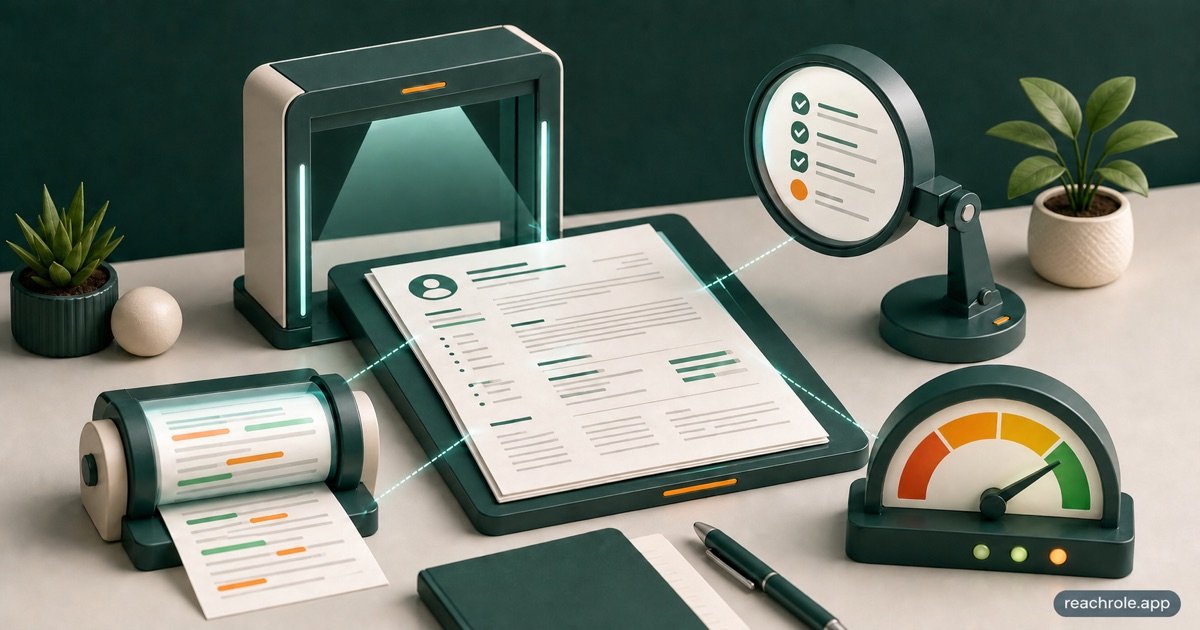
Run your resume through ReachRole's Resume Keyword Matcher to identify missing technical keywords and hard skills before you hit submit.
4. Dumping Vague Skill Badges Without Proof
A major mistake that kills interview credibility is creating a massive "Skills" block with 40 buzzwords — Python, React, AWS, Docker, Kubernetes, Leadership, Teamwork, Machine Learning, Agile — when your actual job bullets never mention using them.
Experienced interviewers view unverified skill lists with skepticism. If you list AWS in your skills header, at least one project or work experience bullet must demonstrate what AWS services you deployed (e.g. S3, Lambda, EC2) and what problem you solved with them.
The 6-Second Recruiter Glance Rule
Recruiters scan the top third of your resume first: your name, current title, target role headline, core stack, and most recent employer. If your primary relevance is buried on page two under college hobbies, the recruiter will have moved to the next candidate before finding it.
What are the biggest resume mistakes that prevent interviews?
The biggest resume mistakes that prevent interviews are submitting multi-column or graphic-heavy layouts that ATS software cannot parse, listing routine job duties instead of measurable outcomes, omitting role-specific technical keywords, and blasting identical resumes to hundreds of jobs. To secure interviews, use a clean single-column format, quantify your impact using metrics, tailor your keywords to the top 5 requirements of each job posting, and keep your strongest evidence in the top third of the page.
5. The "One-Size-Fits-All" Application Blast
Blasting the exact same resume to 200 different job postings across software development, data analytics, and DevOps is one of the fastest routes to burnout and zero interview invitations.
A resume customized for a Backend Engineer position highlights database queries, API latency, and caching. That same resume sent to a Full-Stack position fails because it omits React state management, component architecture, and CSS responsiveness.
Sending 15 thoughtfully tailored resumes with 85%+ keyword alignment yields far more interviews than spamming 300 generic PDFs. You can diagnose your resume's alignment score using our free ATS resume checker in under 60 seconds.
6. Unexplained Career Timeline Friction and Formatting Clutter
Even after clearing the automated filters, human screeners look for reasons to say "no" to narrow down their interview shortlist. Common friction points include:
- Unexplained employment gaps: If you took time off for caregiving, medical recovery, upskilling, or freelance consulting, label the gap clearly on your timeline rather than leaving a silent multi-year void.
- Inconsistent date formats: Mixing "05/2023 - Present" with "June 2021 to Aug 22" signals carelessness. Standardize to
Month Year – Month Yearthroughout. - Broken hyperlinks: Ensure your GitHub, LinkedIn, and portfolio URLs are clickable and lead to live, active profiles.
- Bloated page length: Unless you have 10+ years of deep domain experience, keep your resume strictly to 1 or 2 pages. Freshers and candidates with under 5 years of experience should almost always stick to a single page.
The 15-Minute Pre-Submission Diagnostic Checklist
Before applying to your next dream role, run through this final checklist:
- Copy-paste test: Copy all text from your PDF and paste it into plain Notepad. If section headings scramble or contact details disappear, your layout is failing ATS parsing.
- Top 5 keyword check: Compare the job description's top 5 required skills against your first page. Are they explicitly present in your experience bullets?
- Metric verification: Does every work experience entry have at least one bullet with a measurable number, percentage, or outcome?
- Single-column layout: Is your resume free of multi-column tables, graphics, and margin text boxes?
If you are unsure where your resume stands, scan it through ReachRole's Free ATS Resume Checker. You will get an instant breakdown of your ATS score, matched keywords, and prioritized fixes so you can fix errors before sending your application.
Check your resume against these hiring standards
Upload your PDF to get an instant match score, detect missing keywords for your target role, and check single-column parsing.
Scan my resume free → ✓ No account needed · Takes 60 seconds
Shivani S Co-founder, ReachRole
Co-founder of ReachRole. Writes about ATS screening, resume structure, and the Indian hiring process.